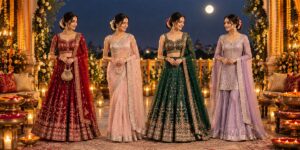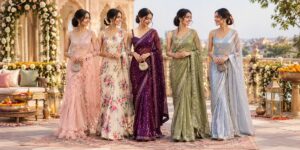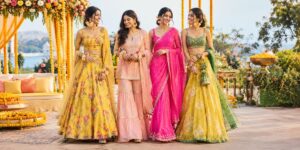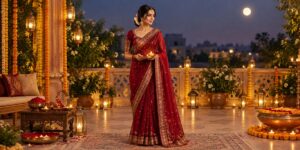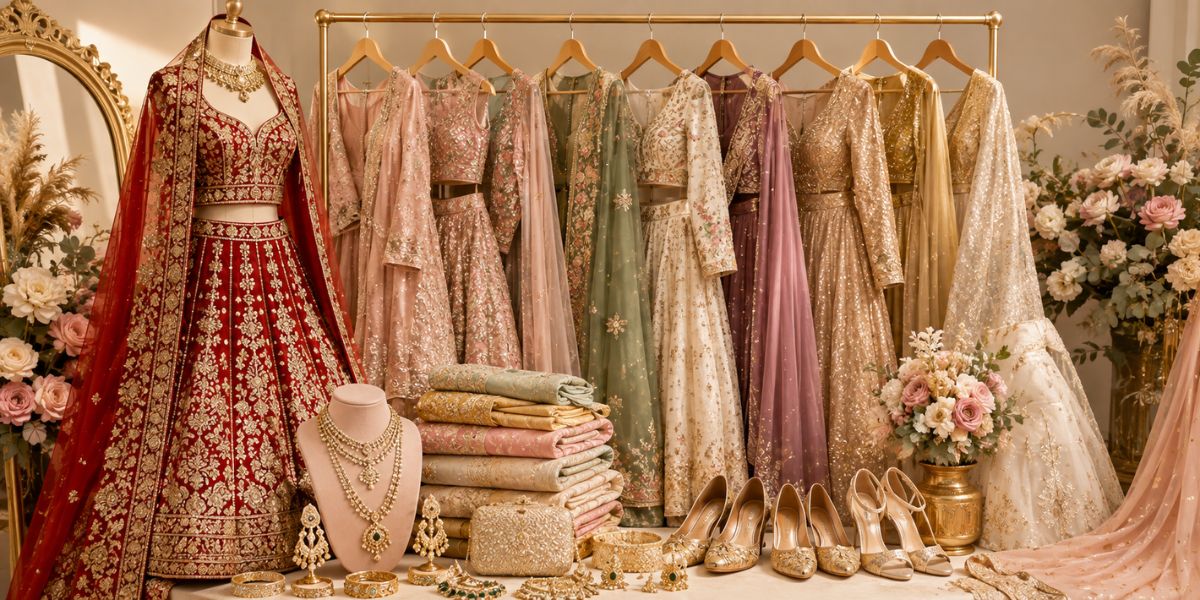
Indian weddings bring several celebrations, and each ceremony needs a different outfit. Therefore, building your bridal wardrobe can feel exciting but overwhelming.
However, a simple plan makes bridal shopping much easier. You need outfits that balance tradition, comfort, glamour, and personal style.
From the Haldi ceremony to your honeymoon, every outfit has a purpose. Here are 15 must-have outfits for a complete Indian bridal wardrobe.
Quick Answer: Which Outfits Does an Indian Bride Need?
An Indian bride generally needs 10 to 15 outfits for her wedding celebrations. The essentials include a bridal lehenga, engagement outfit, Haldi outfit, Mehendi ensemble, and Sangeet look.
Additionally, include a bridal gown, traditional saree, reception outfit, cocktail dress, and trousseau dresses. Anarkalis, Indo-Western sets, regional outfits, and honeymoon wear also add useful variety.
This mix gives you options for traditional ceremonies, modern celebrations, and post-wedding events.
How to Build a Complete Indian Bridal Wardrobe
Start by listing every ceremony before you begin shopping. Then, assign an outfit to each event based on its dress code.
Next, balance heavily embellished pieces with lighter outfits. This approach keeps your wardrobe versatile without making every look feel overly grand.
Also, consider your wedding season before selecting fabrics. Lightweight fabrics suit summer events, while silk and velvet work well during winter.
Finally, choose outfits that you can reuse after the wedding. Versatile designs give your bridal wardrobe greater long-term value.
1. The Bridal Lehenga
The bridal lehenga remains the heart of an Indian wedding wardrobe. It usually features rich embroidery, detailed handwork, and luxurious fabrics.
Therefore, choose this outfit before shopping for smaller functions. If you plan to Buy Designer Bridal Lehenga Online, consider your venue and wedding season.
Also, choose a silhouette that lets you move comfortably during the ceremony.
Also Read: Designer Bridal Lehenga Price Guide: What Influences the Cost
2. The Engagement Outfit
Your engagement marks the beginning of your wedding celebrations. So, choose an outfit that feels elegant without looking too heavy.
A pastel lehenga works beautifully for daytime events. Meanwhile, a glamorous gown suits an evening engagement perfectly.
You can also choose lighter embroidery if you plan to reuse the outfit later.
Also Read: Engagement Party Outfit Ideas for the Modern Woman
3. The Haldi Outfit
Haldi celebrations can get messy, so practicality matters here. Choose a lightweight yellow lehenga, suit, or festive co-ord set.
Cotton and breathable fabrics can keep you comfortable for longer. Additionally, avoid delicate embellishments that may be difficult to clean.
A simple silhouette also lets you enjoy the ceremony without worrying about your outfit.
4. The Mehendi Ensemble
Your Mehendi outfit should combine colour, comfort, and personality. Bright greens, pinks, oranges, and floral prints create a cheerful appearance.
Since you may sit for several hours, lightweight fabrics work best. A comfortable dupatta also makes the outfit easier to manage.
Choose easy sleeves and minimal layers if you expect a long Mehendi session.
Also Read: Latest Floral Mehendi Outfit Trends for 2026 Weddings
5. The Sangeet Lehenga or Gown
Sangeet nights are all about music, dancing, and celebration. Therefore, your outfit should allow plenty of movement.
Choose a flared lehenga or comfortable gown with lightweight embellishments. Mirror work and sequins can create beautiful stage-ready glamour.
Most importantly, check the outfit’s weight before committing to heavy embroidery.
Also Read: Sangeet vs Cocktail Night: How to Dress Differently for Both
6. The Wedding Day Gown
A bridal gown offers a sophisticated alternative to traditional wedding wear. Modern brides can choose gowns for ceremonies, receptions, or grand evening celebrations.
If you prefer this style, explore options to Buy Designer Bridal Gowns Online. Choose a well-fitted silhouette that complements your body shape.
Moreover, comfortable construction helps you move confidently throughout the event.
Also Read: Princess-Cut vs Mermaid Bridal Gowns: Which One Suits You
7. The Traditional Wedding Saree
A traditional saree adds timeless elegance to a bridal wardrobe. Depending on your culture, choose a Banarasi, Kanjeevaram, or regional weave.
You can reserve this saree for wedding rituals or important family ceremonies. Moreover, quality sarees can remain valuable wardrobe pieces for years.
Choose classic colours if you want maximum opportunities to reuse the saree.
Also Read: Stylish Yet Comfortable Bridesmaid Lehengas & Sarees
8. The Reception Outfit
Your reception outfit deserves a glamorous look. Most brides choose an embellished gown, designer saree, or statement lehenga.
Since receptions often happen in the evening, metallic details and refined embroidery work beautifully. Choose an outfit that photographs well from every angle.
Also, consider your jewellery before finalising the neckline and embellishment.
9. The Cocktail Party Dress
A cocktail party gives you a chance to explore modern fashion. You can choose a sequined gown, draped dress, or Indo-Western ensemble.
However, avoid sacrificing comfort for trends. You should enjoy conversations, photographs, and dancing with ease.
A versatile cocktail party outfit can also work for future festive parties.
10. The Trousseau Sarees
Every bride needs sarees for post-wedding dinners and family celebrations. Therefore, build a versatile collection instead of buying similar designs.
A Luxury Trousseau Dresses Collection can include silk, chiffon, georgette, and embellished sarees.
Choose different colours, fabrics, and drapes for greater variety. This approach also gives you more styling options after marriage.
Also Read: A Bride’s Capsule Wardrobe: 5 Versatile Pieces for All Wedding Events
11. The Anarkali Suit
Anarkalis are ideal for smaller functions, pujas, and family gatherings. Their flowing shape offers both elegance and comfort.
Additionally, they remain useful after the wedding. Choose one richly embroidered design and another lightweight option for regular celebrations.
You can also pair Anarkalis with different dupattas for a fresh appearance.
12. Indo-Western Sets
Indo-Western outfits add flexibility to your bridal wardrobe. You can choose cape sets, jacket ensembles, draped skirts, or modern kurta sets.
These outfits work particularly well for casual wedding events. Later, you can style individual pieces for festive occasions.
Therefore, they offer excellent value beyond the wedding season.
Also Read: Cape Gowns, Draped Sarees & Crop Lehengas: The Indo-Western Pieces You Need This Season
13. Regional Bridal Wear
Your wedding wardrobe can also celebrate your cultural roots. Depending on your family traditions, consider outfits such as a Poshak or Panetar.
These outfits add meaning beyond fashion. They also help preserve important traditions while creating memorable wedding photographs.
Ask your family about traditional dress requirements before completing your bridal shopping.
Also Read: The Art of Zardozi and Traditional Embroidery in Designer Wear
14. The Statement Pre-Wedding Outfit
A statement pre-wedding outfit gives you another opportunity to experiment with your style. Choose a distinctive saree, lehenga, or contemporary festive ensemble.
If you plan to Buy Designer Sarees in Chandni Chowk, compare fabrics, embroidery, colours, and drapes before purchasing.
A versatile saree can work for a pre-wedding event and future family celebrations.
15. Comfortable Honeymoon Wear
Finally, your bridal wardrobe should include comfortable honeymoon outfits. Heavy wedding embroidery has little place in a travel suitcase.
Instead, choose breathable dresses, coordinated sets, relaxed separates, and easy-to-style outfits.
These pieces should feel comfortable while still looking polished in travel photographs.
How to Shop Smarter for Your Bridal Wardrobe
Set a realistic budget before visiting bridal stores. Then, divide it between your main wedding outfit and smaller ceremony looks.
Next, prioritise quality over quantity for heavily worn pieces. A well-made outfit can serve you for years when you care for it properly.
Also, schedule fittings early for heavily embroidered outfits. This gives your designer enough time to make necessary adjustments.
Most importantly, avoid buying every outfit in the same colour or silhouette. Variety makes your wedding wardrobe more interesting and practical.
Frequently Asked Questions
How many outfits does an Indian bride need?
Most brides need around 10 to 15 outfits for their wedding celebrations. However, the number depends on the ceremonies and family traditions.
Which bridal outfit should I buy first?
Start with your main wedding outfit because it usually needs the most planning. Then, purchase outfits for the engagement and other major ceremonies.
What should I wear for Haldi and Mehendi?
Choose lightweight and comfortable outfits for both functions. Bright colours, breathable fabrics, and easy silhouettes work particularly well.
Can I include both gowns and lehengas?
Yes, combining both styles creates a more versatile bridal wardrobe. You can wear lehengas for traditional events and gowns for modern celebrations.
Where can I shop for bridal wear in Delhi?
Chandni Chowk offers numerous options for traditional and designer bridal fashion. Compare craftsmanship, fitting, fabric quality, and customisation before purchasing.
Conclusion
Planning your bridal wardrobe becomes easier when you shop according to each ceremony. Every outfit should serve a purpose while reflecting your personal style.
If you’re looking for the Best Bridal Wear Store in Chandni Chowk, explore collections that combine craftsmanship, comfort, and contemporary design.
At Dee Vee Couture, brides can discover elegant lehengas, gowns, sarees, and festive outfits for different wedding celebrations. Build your wardrobe thoughtfully, and choose pieces you will love wearing beyond your wedding day.